Thomas Hawk's Digital Connection

Wednesday, May 14, 2008

Boycott Washington DC's Union Sation -- Photography is Not a Crime

Andy Carvin's Waste of Bandwidth: Almost Arrested for Taking Photos at Union Station

I read with dismay this morning about yet another incident of photographer harassment here in the United States. In this most recent case Andy Carvin was demonstrating a new Gigapan panorama camera in Washington DC's historic Union Station.

Unfortunately for Andy, his crime of photography almost got him arrested.

From Andy:

"I managed to shut the camera, and started to disassemble the Gigapan from the tripod as a fourth security person arrived. He was dressed differently than the other three people, and had a former-marine-turned-middle-management air about him. I twittered as he spoke:

Official saying Union Station is a private space, no right to photograph without approval.

I asked for his business card and he handed it to me: Robert H. Mangiante, Assistant Director, IPC International Corporation. He then summed up the situation: pack up your gear and leave now, or we'll arrest you. It's our choice. Our gear was already packed up at this point, and Wright and his friend had an event at the National Press Club anyway, so that was that. The Gigapan went into my backpack, I folded the tripod and we went our separate ways."


This is sad. Union Station is a beautiful and classic example of Beaux-Arts style architecture in the United States. It is over 100 years old and was built with $125 million of taxpayers money.

In 1981 Elizabeth Dole developed a plan to redevelop the station using a public/private partnership.

The station today boasts over 32 million visitors a year and claims to be the most visited destination in Washington DC. Yet, don't plan on taking any photographs inside this historic building if you visit DC.

Photography should not be a crime. Photography in historic places like Union Station should not be illegal.

One thing that I know is that I won't be spending any of my tourism dollars at Union Station in the future. If they want to hassle and harass photographers, the next time I'm in DC I just won't visit them at all.

Digg Andy's original post here.

Hey DJ

Hey DJ

All For Freedom and For Pleasure

All for Freedom and For Pleasure

Tuesday, May 13, 2008

10 Interesting Things I Learned About Ansel Adams

Ode to Ansel Adams
My Ode to Ansel Adams. I took this photograph in the meadow where Ansel Adams shot his famous Moon and Half Dome.

Robert Scoble, Marc Silber, Rocky Barbanica and I had a great opportunity to spend two fantastic days with Michael Adams, Ansel Adams' son, late last month in Yosemite. We were interviewing Michael for a new video show that Scoble, Silber and myself are working on for FastCompany.TV called PhotoCycle. Rocky is the producer.

During the course of our two days together, Michael took us to many of the historic places where Ansel Adams made some of his most compelling, dramatic enduring and iconic images of nature in Yosemite Valley. During these two days I was able to ask Michael tons of questions about his father and the business that he still runs today selling prints for the Ansel Adams Gallery in Yosemite.

I thought I'd put a post together of 10 interesting things that I learned about one of the world's most famous photographers from Michael. Please note that these are my impressions based on my conversations with Michael.

1. Ansel Adams would have loved and embraced digital photography. According to Michael, his father very much loved the technology of his day and frequently used the most cutting edge tools available.

We all know about Adams' revolutionary zone system that he pioneered in the development and printing of photographs. But as much as this, Adams was constantly testing out the very latest and prototype cameras from people like Polaroid and Hasselblad. Because he was Ansel Adams, he had a great opportunity to try out so many new technologies as they rolled out. According to Michael, Haselblad had an understanding with Ansel where pretty much anything they built could be on loan to him.

When I asked Michael how his dad might view digital photography, Photoshop, etc. today, he told me that he thought his dad would love it and very much be involved with it.

2. Ansel Adams proudest moment in his career was probably when he was recognized by the legendary Alfred Stieglitz and given a show at Stieglitz's prestigious gallery in New York City still early in his career. According to Michael, his father thought the world of Stieglitz and his endorsement with a solo show at Stieglitz's prestigious gallery in 1936 was probably the thing he was most proudest of, even more than all of his later significant achievements and accomplishments.

3. Ansel Adams typically always had something nice to say about someone else's photography. According to Michael, even if a particular style or print was not Adams' taste, he would find something positive about a photograph and compliment the photographer on it. Adams would frequently go out of his way to compliment others on their work and give them positive encouragement and feedback where he could.

4. Sometimes you only have a split second to take a famous photograph. One of my favorite stories that Michael shared with me about his father was when Ansel made perhaps his most famous photograph Moonrise, Hernandez, NM. This photograph is the highest Ansel Adams' print sold at auction to date having sold at at Sotheby's for $609,600 in 2006.

According to Michael, Ansel saw this wonderful scene and pulled the car over to take the photograph (Michael was with him). Ansel then put his glass plate into his camera to make his exposure. Before Ansel even had time to pull the plate out and shoot a second exposure on the reverse side, the moment was lost. A one shot opportunity.

5. Ansel Adams still worked for two years in the darkroom after he stopped taking orders for prints near the end of his life. According to Michael, Ansel's fine art prints were in such demand towards the end of his life that even when he stopped accepting orders from clients for his famous work, he still had a backlog of two years worth of darkroom work to do to fulfill prints that had been previously ordered.

After Adams stopped his darkroom work he was coaxed back into the darkroom for one last project before he died to produce a "museum series" of a select group of his prints that would be used as an entire series and to be shown in museums. I sensed that there was some dissatisfaction over this decision from Michael who seemed to think that this may not have been the best decision for Ansel to make near the end of his life. According to Michael, Ansel died before this series of prints was ever finished.

6. Ansel Adams relied on his commercial work to pursue his passion as a fine arts photographer. Like a lot of photographers in his day, Ansel was not able to earn enough money on his fine art photography alone to devote himself 100% to that life. Michael told me that Ansel frequently took commercial photography assignments (some in color even -- in contrast to his more famous black and white work) in order to make a living.

For one of Ansel's famous commercial assignments for Kodak (which was subsequently printed as a 60ft. x 15ft. billboard sized panoramic advertisement in Grand Central Station) he shot an amazing color-rama with photographers (with Kodak cameras in their hands of course) in it from Washburn point near Glacier Point overlooking Yosemite Valley.

According to Michael, Ansel used a lot of these commercial trips as dual trips where he would shot his commercial assignments in places to also do his fine art photography while he was there.

7. Ansel Adams frequently made duplicate photographs of his images when taking them. One thing that I tell people constantly is that it is always a good idea to take more than one shot of an image if you can in the camera. According to Michael, Ansel frequently took multiple exposures of the same shots. Many of his negatives are duplicate images of which he'd select the best image to use for printing.

8. Ansel Adams was a tireless crusader for conservation. According to Michael one of Ansel's very first trips to Washington DC was to lobby to make King's Canyon wilderness a protected area which was accomplished. Michael said his dad went to DC about once a year and was always happy to lobby for these issues.

Ansel was the first photographer to shoot an official Presidential portrait when he was commissioned to photographed President Jimmy Carter. Ansel also met with Presidents Johnson and Ford. One of the interesting stories that Michael told me about his father was when he met with President Reagan. According to Michael they talked for an hour and neither one of them heard what the other one said.

Ansel Adams was awarded the Medal of Freedom by Jimmy Carter in 1980.

9. So much of Adams' work was in the darkroom. One of the biggest challenges, even today, when images are used from the Ansel Adams archive (at the University of Arizona in Tucson) is to ensure that the final image from the negative is a quality image. So much of the final outcome of Ansel's work came from the darkroom.

10. The Center for Creative Photography is currently trying to digitize the entire Ansel Adams library. They are scanning his prints and trying to complete the library. Today Corbis represents the commercial rights for the Ansel Adams Publishing Rights Trust which is a trust with three board members who monitor the sales for the benefit of Michael, his sister, and a portion each year which goes to the Center for Creative Photography.

To see some of our early rough video with Michael Adams check out this post by Robert Scoble here. There will be a finished and produced video based on our footage with Michael Adams coming out from FastCompany.TV soon.

Today Michael Adams still operates the Ansel Adams Gallery in Yosemite Valley. Here today they still sell Ansel's popular work along with many new contemporary photographers. The gallery also has a blog now which you can find here.

12 Ways to Never Miss a Photo Opportunity

12 Ways To Never Miss A Photo Opportunity

Jim Goldstein has an interesting post up over at digital Photography School titled "12 Ways to Never Miss a Photo Opportunity."

These are my two favorites:

"2. Be sure to have not just (1) one fully charged battery but (2) two"

"4. Before heading out make sure you have CF cards in your camera that are empty or have lots of free space"

Two more that I'd add. Keep in mind though that I'm pretty extreme about this stuff.

Always have your digital SLR with you everywhere you ever go (or if you are not that committed at least have a point and shoot with you 100% of the time) and as an extension to his tip number 4, always have your laptop (or some sort of hard drive based offloading device) with you to transfer photos off your CF cards and onto storage to free up more space on your CF cards to shoot more.

Photobucket Introduces Group Albums

Photobucket Introduces Group Albums to Make Sharing Simple

TechCrunch has a post out on a new feature by Photobucket which will allow "groups" of people the ability to share photos in an album. People can then password protect these albums.

The new service reportedly goes live on Wednesday morning.

I'm not exactly sure how this will work but I do think that there is potentially a great market for the company who can finally get group sharing right.

Lots of people belong to various organizations where they do not want to publicly share photos with the world. Think your kids kindergarten class, your high school reunion, your church, your fraternity, etc.

These organizations are well suited for photography but sharing group photos has never been easy. The biggest problem is that most sites require all of the group members to join a site in order to access a password protected area on that site.

What is probably needed is a site where only one person has to join the site and that person can then send out an email invitation with a simple link which will get anyone else (even non members from that site) into the group album for viewing and uploading.

TagCow to Charge For Their Tagging Service

Is Tagcow The Future of Tagging on Flickr?

I got an email from TagCow today thanking me for participating in their beta tagging service (they've tagged thousands of my photos on Flickr for me) and letting me know that to thank me that I was credited with "100 free tagging credits."

100 Tag credits get me their tagging service on 100 more photos.

"Dear TagCow.com Customer,

Let us begin by saying thank you for being a beta user. By using TagCow.com you have provided invaluable feedback and information during our Beta testing. From your feedback, we have made many improvements to our tag quality, performance and processes. We are now looking forward to the next phase in our development and are readying our site for a release to a broader audience.

To say thank you, we have credited your account with 100 free tagging credits. We hope you will continue to use the service and see the improvements that we have made and will continue to make.

Sincerely,
TagCow.com"


Now of course I knew that TagCow was too good to be true when it first started out. And I had no idea of how a company could offer something like this for free.

The cost of the tagging service is by tag as follows:

250 $9.95
500 $19.95
1000 $39.95
2000 $69.95 save 10%
2500 $89.95 save 10%

So basically you are paying 4 cents per tag that they put on the photo with discounts if you buy 2000 or more tags at a time.

Now TagCow says that they use a "secret" method to tag your photos. From their FAQ:

"We can't tell you all our secrets but we can say that it is a combination of both computer and human technology. There have been numerous attempts to have computers do some sort of facial or other type of recognition. But let's face it, the technology is just not there yet. We incorporate the best of both "technologies" to solve a fill a very simple need: searchable personal photos."


How they are tagging is actually pretty simple though. They are basically just using Amazon.com's Mechanical Turk service and paying other people 4 cents per tag to tag your photos. Read here at TechCrunch for more on that. They do also have a automated technology that does text recognition from photographs, but my own experience is that this part of their tagging service is pretty worthless. The worst and most inaccurate tagging that they did on my photos came from what was obviously their text recognition engine. (See the last 14 tags on this photo on Flickr to see what I'm talking about).

So other than their text search engine which does not add very much descriptive value at all to photos, TagCow is basically just using Amazon's pay for hire Mechanical Turk service to get people to tag your photos for 4 cents per photo. They then charge you 4 cents for photo. So how do/will they make money?

Well you are paying 4 cents per tag for both their automated and Mechanical Turk tags. So they come out even on the Mechanical Turk tags and make the money on the automated text recognition tags.

Assuming the popularity of their service increased over time and they got more users would be where the arbitrage would begin to come in. Essentially they could begin paying less for tagging and charging more and keeping a market differential.

So the question is will this business plan work?

I doubt it.

While I've enjoyed and appreciate the free tagging that they've done on my photos, I wouldn't pay for it. The text recognition tags are horrible and the Mechanical Turk tagging is just too variable.

In some cases I got some fantastic new tags on my photos. But in other cases they were clearly wrong. Many of the taggers didn't understand Flickr's method of tagging where you are required to put multiple words in quotation marks. (Hence "girl in blue dress" without the quotation mark tags a photo with: girl, in, blue, dress).

Also many of the tags were not all that descriptive. I've had to delete a lot of their tags on Flickr in fact because I use SmartSetr to organize my photos by their tags and some were clearly mistaken. They labeled some photos as paintings for instance which were not. The spelling on their tags was hit and miss sometimes too (I guess some of that is to be expected when you pay people $1.20/hour to tag photos).

Would I pay someone to tag my photos if they could do as good a job as I could though? Absolutely. At present I am spending hours every week keywording my photos in Adobe Bridge. In fact I'd pay more. But tagging is still a very subjective thing and getting someone who sees my photos exactly the same way that I do may be a tough job to assign.

Monday, May 12, 2008

I'll Be There

I'll Be There

Winter Morning in New York

Winter Morning in New York

CameraPorn: 60 Photography Links You Can’t Live Without

60 Photography Links You Can’t Live Without at CameraPorn

CameraPorn has a nice round up of 60 photography related links (including a mention of thomashawk.com) that is worth checking out.

I always like lists like this because even though I'm frequently familiar with many of the sites, I almost always find new sites worth visiting and subscribing to as well.

I've been meaning to do one of these lists myself now for a few months. Maybe I'll get around to that at some point... then again, I've got 400 shots from a recent trip to L.A. that are staring at me waiting to be processed. :)

Eye-Fi Adds Two New Wi-Fi Cards, Adds Geotagging Via W-Fi

Eye-Fi adds two new wireless memory cards to their product line-up

TechCrunch is reporting on two new cards being added to Eye-Fi's lineup of wireless memory cards. I covered Eye-Fi last in October of last year when they released their 2GB card.

In addition to their 2GB card that directly uploads your photos to any of about a dozen photo sharing sites for $100, Eye-fi now is releasing a cheaper card for $80 that doesn't include wi-fi uploading but will allow you to wireless transfer your photos from the card to your home computer.

Eye-Fi's new $130 card though is the one that is more interesting to me. With the new Eye-Fi Explore card, Eye-Fi is now using wi-fi networks to try and auto geotag the photos that you take. Now that's pretty cool. Although there are separate hand held GPS devices that you can use to try to later merge a file with your camera's photos to auto geotag, having it happen automatically in the camera sounds much easier.

I haven't played with the new card yet and I'm not sure exactly how accurate the geotags are, but still auto-geotagging seems pretty cool. Right now wi-fi is using Wayport's wi-fi hotspots (they claim 10,000+ hotspots, including every McDonalds) and your $130 price includes a year of this service for the memory card. My guess is that the technology probably doesn't work very well in non-urban areas with no wi-fi around, but in dense urban areas like Manhattan or San Francisco auto-geotagging probably works pretty well.

The new Eye-Fi cards are scheduled to be available on June 6th. More on the new cards here.

I'm still not sure the Eye-Fi card is for me though. I carry two 8GB cards with me and swap them in and out as I need room offloading photos to my MacBook Pro that is always with me. I shoot 200-400 photographs a day and only in RAW. Because I shoot so much I'm just not sure that I could survive on a 2GB card.

The geotagging feature is pretty cool though.

I keep having these fantasies (yes I fantasize about digital cameras) that when the new Canon 5D comes out that it will have some sort of auto geotagging GPS chip inside of it. I'm sure eventually all of the cameras will have GPS included which will make the painful chore of manually geotagging your photos a thing of the past.

Right now, by the way, I use Google Earth and the free software Geotagger for the Mac to do all of the geotagging on my photos. This works much easier than geotagging your photos on Flickr or Zooomr and also geotags at the file level (which can then be autoread by Flickr or Zooomr on upload) making sure that you will always have that information associated with your photo in the EXIF data.

Sunday, May 11, 2008

Happy Mothers Day

Happy Mothers Day

Saturday, May 10, 2008

Highway to Hell

Highway to Hell

My 5,000th blog post to thomashawk.com

Be a Good Little Monkey and Whatever You Do, Don't Be Too Curious

Be a Good Little Monkey and Whatever You Do Don't Be Too Curious

Neon Days and Neon Nights here.

Friday, May 09, 2008

LoJack for Laptops

LoJack for Laptops by Thomas Hawk, on FlickrI just purchased a three year subscription to LoJack for Laptops from Amazon.com.

What is LoJack for Laptops?

LoJack for Laptops is software that is installed on your Mac or PC behind the scenes and can report in to Computrace LoJack it's location most of the time if your PC is stolen.

According to LoJack for Laptops their service works like this: if your computer is stolen:

1. You file a police report and notify our Recovery Team.

2. When your stolen computer contacts our Monitoring Center, it is placed on high-alert and starts calling us every 15 minutes, allowing our Recovery Team to closely track your computer’s location.

3. Our Recovery Team provides law enforcement with tracking information and documentation essential for procuring search warrants and leading them to the location of your computer.

4. The police recover your computer and return it to you!

The company claims to recover 3 out of 4 stolen computers that use their service. The company says that their software is tamperproof and still stays on your computer even if the drive is reformatted or a new OS is installed.

So why did I pay $90 to better protect my laptop?

Well for a couple of reasons.

First off I've had laptops stolen in the past. It really sucks. A lot of times what sucks even worse than the laptop theft are the files that are stolen with a laptop. Even more than this though is the sense of victimization that you feel when someone has stolen something from you. The satisfaction of knowing that someone who stole from me was caught and hopefully pays a legal price is probably worth more to me than even the value of the laptop itself.

Oftentimes someone who steals a laptop is likely involved in other crime and so it would also make me feel good if they caught them and other people got their stolen property back too.

Also I'm out and about quite a bit with my laptop. One of my main uses for my laptop is to offload photos that I take from my CF cards to the laptop's hard drive. For this reason my laptop goes with me in my photo backpack every single day. Frequently I worry about walking around with so much expensive gear on me. Not only do I keep my laptop with me everywhere, but I keep my Canon 5D and 4 L Series lenses with me everywhere I go as well. There is a good chance that if someone stole my backpack and I could track the laptop that I might also be able to recover my camera, lenses, batteries and CF cards if they were stolen with it too.

I had my first Canon 5D stolen in the Bahamas two years ago and that really sucked too.

Chances are of course that your laptop will not be stolen. LoJack cites pretty high statistics though. They say 1/10 laptops are lost or stolen and 97% are never recovered. I think if you ask around you probably already know someone who has had one stolen before. For me, the cost of $30 per year for a little extra piece of mind is well worth it.

Thanks, by the way, to Martin Taylor who tipped me off to LoJack for Laptops. I found out about this service when I posted a note on FriendFeed saying I'd pay $200 for a chip to track my laptop with GPS and he brought this service to my attention.

PicLens, The Most Beautiful Way to Browse Photos on the Web

PicLens, The Most Beautiful Way to Browse Photography on the Web

Well I've been using PicLens for a few months now, and I'm a bit late with this post, but if you haven't installed PicLens yet for browsing photos on the web you are missing one of the most beautiful ways to view photography on the internet yet.

The screenshot above does not do justice to the visual experience. PicLens is hands down the best I have ever seen photos look online.

PicLens is an add on for Firefox users. You can go get it here. When you add PicLens to your Firefox experience, photos on many internet sites (including Flickr and Zooomr) have a little play type triangular icon over them. When you click on this icon it transforms your viewing experience and takes photos to a brand new level. Only photos are loaded on the screen and you can move your mouse to scroll through the photos or enlarge or shrink photos in your viewing experience.

With PicLens photos float through your browser like beauty flowing from a waterfall. The motion effects are outstanding. Best of all though, PicLens allows you to see photos in the true splendor that they are best seen in. Large. One of the problems with viewing many photos large on the internet is that you have to click and wait for a new page to load. This gets boring and tiresome. Not with PicLens though. Simply move your mouse scroll button up or down and photos get larger and smaller.

As amazing as PicLens is for browsing photos on the web I do wish that they improve one thing.

Right now interacting with photos on PicLens is very difficult. While you can click through to any photo to fave/comment/bookmark/etc., when you do this PicLens ends abruptly. After you interact with the photo there is no easy way to get back to the PicLens page where you were browsing before you clicked out of your PicLens experience.
What would most easily fix this would be if PicLens allowed you to ctl-click (on a PC) or cmd-click (on a Mac) and have that photo's page load in Firefox in the background. This way you could browse someone's entire stream, favorites, etc. in PicLens, all the while cmd-clicking (in my case) as you go to go back and interact with the photos that you liked best once you were done.

Alternatively, TranceMist suggests that people simply could be allowed to fave/comment on a photo from within PicLens.

Looking at photos on PicLens is like seeing them in a fine art gallery or museum. Photos take on a whole new beauty. But more interactive features are still needed.

More on PicLens from Read/Write Web and Webware.

Thursday, May 08, 2008

SmugMug Gallery Fiasco


SmugMug Gallery Fiasco, originally uploaded by noeltykay.

See update below.

My friend Noel Kleinman (who takes some of the most *amazing* photographs of children and especially his son Jack) uploaded a series of photos to his photostream on Flickr today that document a recent print job that he had done using SmugMug. The photos Noel uploaded really highlight what an awful job SmugMug did on the printing job.

What makes this story worse, is that the photo print (which cost $60) that Noel had made up was a very special print. Noel took some photos of his friend's kid while he was out of town and had planned on giving him the print as a gift for his 40th birthday this Saturday.

Now this is the worst kind of PR a company can have in my opinion. A great photographer saying that their printing sucks and documenting in detail online.

So what should SmugMug do? Well, if I were them I'd have the print redone as professionally as possible and do everything within power, including overnight mail or special delivery, to get the print to Noel before his friend's birthday on Saturday night. I'd probably also comp him a free print in the future and hope that this one bad example could be chalked up to a single mistake and not the general type of production quality that SmugMug stands for.

I'd probably also check into who was doing SmugMug's printing and make sure that they had adequate quality control in place to prevent this from happening in the future.

Where did I first see this problem that Noel was having with SmugMug? On FriendFeed. Don MacAskill, SmugMug's CEO, is on FriendFeed too so it will be interesting to see if indeed a company's CEO can turn a PR problem into a PR solution.

I don't really blame SmugMug for the bad print job. Anyone can get a print wrong. But it's what you do when your customers have a bad experience that counts most of all.

This is also why every company should have a person (or a PR company) that monitors the blogs, twitter, digg, reddit, friendfeed, flickr, etc.) for opportunities to turn customer service problems into customer service solutions.


Update: Two things. First, it should be noted that despite this most recent printing problem, Noel Kleinman holds SmugMug's customer service in very high regard. Also it is nice to see that SmugMug's CEO Don MacAskill monitors social media very closely and personally responded to this blog post in less than an hour. That's to be commended for sure. Not very many CEOs personally monitor social media on their company. I'm printing both Noel's comment and Don's comment from the comment section below to this original post.

From Noel: "Thomas...

SmugMug has ALWAYS provided quality prints to both me and my customers who order from my site.

I have been a SmugMug client for a year now and in that year I have sold several thousand dollars worth of prints and all of my customers have been extremely happy with their prints.

There was one instance last November where a client made two seperate orders...the second order ship prior to the first order. The first order was time sensitive and the client contacted me on a Saturday night. I in turn e-amiled SmugMug support on a Saturday night and had a response within 15 minutes apologizing for the snafu. SmugMug reprinted the first order and sent it overnight to the customer. The original order shipped and the client had two sets of images.

SmugMug customer support is FANTASTIC! In a perfect world the canvas would have been fine...it wasn't. But SmugMug has been a great company to deal with in every aspect imagineable!!!!

Noel
www.nkpix.com"


From Don:

"We'll definitely make this right. SmugMug has an extremely simple, legalese-free print guarantee:

"If you are unhappy with your prints or gifts, SmugMug will reprint or refund your order, whichever you prefer."
http://www.smugmug.com/prints/our-guarantee.mg

In actual practice, we often go much much farther, from custom color correction by our in-house Pros to overnight shipping, refunds, and even sourcing from other labs. A simple Google search will validate that hundreds, if not thousands, of times over.

I just found out about this particular problem, but it turns out our Support Heroes are already all over it - they told me I was lagged. :)

Thanks for blowing the whistle - certainly makes our job easier when we know about problems."

American Bald Eagle

American Bald Eagle

Pownce Increases File Size Limits

Pownce becomes more useful (Scripting News)

Dave Winer blogs about Pownce increasing their file size limits from 10MB to 100MB for free accounts and from 100MB to 250MB for paid Pro accounts.

I'm a Pro member on Pownce and think it's definitely worth it. One of the nicest features on Pownce is that you can use the file share feature to share mp3s with your friends.

Nice work Pownce!

Is Flickr Worth $4 Billion?

Is Flickr Worth $4-Billion? | Mark Evans: Mark Evans does some financial analysis and asks the question, is Flickr worth $4 billion (with a "b")?

Evans suggests that if Flickr were able to better monetize their traffic that they could generate much more revenue than they do today.

Of course part of what has made Flickr as successful as they are in my opinion is exactly that advertising is fairly sparse on the site. It's Flickr's clean attractive look as much as anything that makes it a pleasant place for people who love visual stimulation to hang out at.

From Evans: "With online advertising gaining so much traction, Flickr would be a very attractive target given its traffic and user demographic. For the sake of argument, let’s assume Flickr changed business tactics and introduced two high-profile advertising slots throughout the service. I choose two because it would be significant without pissing off most of Flickr users, who regard Flickr as their property and are resistant to change of any kind.
If Flickr could get $5/CPM, that would generate $10-million in advertising/year based on the assumption it’s getting about 100 million global pageviews/month. It’s not a lot of revenue given the conservative approach to how much advertising Flickr would present and how much it would charge but, nevertheless, it would give Flickr an additional $250-million based on Blodget’s formula.

Then, you’re looking at a company worth $1.75-billion to $3.25-billion. Add on a takeover or IPO premium of perhaps 25%, and you’re looking at a valuation of $2.2-billion to $4-billion."


I do question Evan's $5 CPM guess on Flickr. I'm not sure that Flickr could get CPMs this high. Google doesn't include ads on their image search pages. My guess is that when people are looking at and for specific imagery that advertising may be less effective than when used contextually in other ways like Adsense.
Still a $4 billion valuation on Flickr is interesting nonetheless. As a very active Flickr user though I sure hope I don't see all those monetization advertisements any time soon.

Why Microsoft's Netflix DRM Sucks the Big One

Well remember yesterday when I blogged excitingly about the latest Microsoft Media Center Plug in which reportedly allows you to watch Netflix "Watch Now" movies on XBox 360 Media Center Extenders? The one I was going to try out in the next few days?

Well, it might work for you but it isn't working for me. In fact I can't even get Netflix "Watch Now" to work on my Vista Media Center PC at all. The reason why I can't Netflix's "Watch Now" to work on my Vista Media Center PC?

Yep, you guessed it. DRM. Digital Rights Management. Screwed over by DRM yet again.

Here I am, a law abiding good consumer, paying Netflix for my content, and once again I'm treated like a criminal and not allowed to play legally purchased content on my PC. And this has nothing to do with the plug in that I was trying to install.

It all started early this morning (I got up early because I was super excited about installing Netflix "Watch Now" on my Media Center PC -- actually I tried last night but Netflix was offline for maintenance until 2:30am). Before installing the plug in that I blogged about yesterday for Media Center I wanted to make sure that I could first watch Netflix movies in regular old Internet Explorer on my new Vista PC. Since "Watch Now" doesn't work in Firefox, I launched Windows Explorer and went to Netflix's website to test a movie.

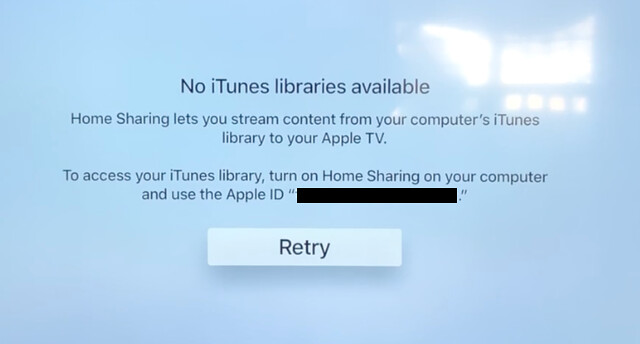
And here's where the trouble began (see screenshot below).

Yet Another Reason Why I Hate DRM

Ok, so, My Microsoft DRM needs to be reset. Annoying, but, oh well, ok, why not. Being that I'm fairly adept at using a computer I figured I'd go through the reset by myself with the friendly little utility that was being suggested.

And then I got *this*

Yet Another Reason Why I Hate DRM, Plate 2

Waaiiiiitttt a minute. The Reset Utility may remove licenses to other content using Microsoft DRM? What? So you mean like if I legally paid for a movie from Amazon using Microsoft's DRM that movie is now going to be toast if I want to get this Netflix thingy up and running. Dude, that sucks. But, on the positive side since I don't generally buy content with DRM crap, I'm probably ok. Whew. Dodged a bullet on that one. But still that totally sucks. And then I got this (I guess they really want to make sure I'm not going to be upset when none of my other DRM stuff works anymore):

Yet Another Reason Why I Hate DRM, Plate 3

Ok, after that last screen I could almost feel it coming. Any second now and I'd be watching Dexter on my hot new Vista PC -- it's a Dell by the way. Dude I got a Dell.

But... Oh NO MR. BILL!!!!!!!!! Then I got this! Big old sad face for Mr. Thomas Hawk.

Yet Another Reason Why I Hate DRM, Plate 4

Ok, I'm not one to give up easily, so my next call was to Netflix. First off, I told the phone rep I'd be blogging this. I don't do this to try and get better support, I do this because the father of all blogging Dave Winer said he does it to be fair to the person he's talking to.

So we tried a bunch of stuff on my computer. Restarting it. Killing processes with control-alt-delete. Running Netflixy stuff from adminstrative mode. etc. etc. And NOTHING would work. Finally the Netflix guy gave up on his end and suggested that it was a problem with my hardware. What? You mean this brand new Dell PC that I bought just a few months back? Yep.

He told me that my problem likely had to do with something called COPP (certified output protection protocol) or HDCP (he wasn't sure that this was but looked it up and told me that it was High Bandwidth Digital Content Protection). Sounds like fancy names for plain old DRM if you ask me.

He said that the error code that I'd been getting was showing up in other cases as well for some "odd reason," adding "we're not actually sure why these videocards are doing this."

He said I could try a few new things. He recommended that I check with my video card maker to see if there was a more updated driver. He also recommended that I reset the resolution on my monitor to below 1200x800 (presently it's set at 1920x1200 which he said could be a problem). He also said that instead of using the DVI cable that I'm using that I might want to try a VGA cable. And finally he added that I might need to hook up a second monitor to my PC and run it in dual monitor mode.

Ok, so like the title says. Why Microsoft's Netflix DRM Sucks the Big One! I still have no Netflix "Watch Now" even though I'm paying for it.

And that cool little Media Center Netflix plug in that I blogged about yesterday? I'm a long, long, way from getting that up and running.

By the way, I'm not the only one that this is happening to. Check out Davis Freeberg's similar experience with Netflix's DRM here.

Doesn't it suck when DRM gets in the way of legitimate use?

Half Dome and the Better Half

Half Dome and the Better Half

Wednesday, May 07, 2008

Photo Shoot

Photo Shoot

If You Put That Picture on the Internet I'll Call My Lawyer

If You Put That Picture On The Internet I'll Call My Lawyer
Photo by Jeremy Brooks.

My friend Jeremy Brooks blogged an altercation he had with some bozo (see photo above) on the street in San Francisco. He blogs about his experience here.

From Jeremy:

"This guy was on the corner of Stockton and Columbus in San Francisco yelling at a homeless man. Anger, conflict, drama — sounds like a great shot to me. I crossed the street but was unable to get anything interesting, since I only had my 50mm lens on the camera and I was just too far away.

However, Mr. Angry Overreaction Man decided that he now had a problem with me. He confronted me, demanding my camera. Of course, I refused. He got in my face and started threatening me, telling me that I cannot take his photo without his permission. I told him that yes, in fact, I can. He then walked up and bumped into me, trying to act tough. I told him that one more touch and I would call the police.

Of course, he didn’t like that very much, and at that point told me that if I put his picture on the internet, he would call his laywer. I assured him that his photo would be on the internet, and he then walked up and grabbed my camera lens. Well, that’s just not something that I will put up with, so I pulled the camera away from him and reached for my phone and started dialing. Once he saw that he turned away, still yelling threats, and continued on his way.

I felt bad for his daughter, who was with him, because she was obviously embarrassed by his antics and kept pleading with him to stop. I have a great shot showing her looking up as if saying “Oh boy, here he goes again”. But I’m not going to post that one, as she was not acting like an idiot and I don’t want to embarrass her. Mr. Angry Overreaction Man seems to do enough of that.

So, Mr. Angry Overreaction Man, your photo is now on the internet. Call your lawyer. Tell him somebody on a public sidewalk took your photo while you were on a public sidewalk. Then tell him you physically assaulted the photographer. See what he says."


First off, Jeremy is absolutely within his rights to photograph anyone he wants to in public. There is no law that protects people from having their image taken or from you posting it on the internet. When someone goes out on a public street anyone can legally shoot them and publish their image within standard editorial context (i.e. news, fine art, etc.).

Now I've had my fair share of run ins with people who object to my taking their photograph in public. And my basic rule is this. If I shoot someone and they object and act civilly like a human being I'm more than happy to oblige their request not to publish their photograph. On the other hand if they are an asshole and are confrontational, chances are not only will I publish there photo on the internet, I very well may blog about my experience with them as well. And I might also use whatever social network I can (digg, reddit, flickr, etc.) to further share with the rest of the world what a prick they are.

It's easy. Someone's polite with me, I'll probably be polite back with them. Someone threatens me or tries to touch my camera or person or is unpolite, then I figure they have it coming.

I've had lots of people email me and ask me to remove photos of them that I have on the internet. And I've removed dozens of photos I've published on the internet. Be respectful and you'll get my respect. Be disrespectful and it won't get you anywhere.

If you have the inclination digg Jeremy's original blog post here. It would be nice to share with the rest of the world that being a jerk when someone takes your photo in public doesn't pay.

On reddit here.

Pop and Drop

Pop and Drop